
Bone Grafting Before All-on-4: When It’s Needed (And When It Isn’t) for Coachella Valley Patients
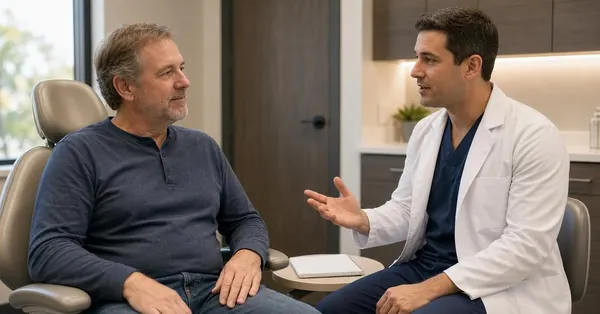
If you are researching All-on-4 dental implants in Coachella Valley, you will quickly run into a common question: “Will I need a bone graft first?” The honest answer is: some patients do, and many patients do not. The difference usually comes down to what your jawbone can safely support and how your full-arch plan is designed.
At Implants Guru, Dr. Keerthi Senthil (DDS, MS) uses clinical evaluation and 3D imaging to help patients understand what is driving a graft recommendation, and whether there are realistic alternatives for their situation.
In our previous blog, "Bone Graft Before Implants? Signs and Options," we discussed common reasons grafting comes up for dental implants. In this article, we focus on how grafting decisions specifically connect to full-arch All-on-4 planning and what questions Coachella Valley patients should ask.
TL;DR - Bone Grafting Is a Planning Decision, Not a Default
Bone grafting is sometimes recommended before (or during) an All-on-4 plan to improve implant stability, positioning, or long-term support. Whether you need a bone graft or a sinus graft depends on what your 3D scan shows and what your final teeth need to do functionally.
- Many All-on-4 plans avoid large grafts by using available bone and strategic implant angles.
- Grafting is more likely when bone is too thin, too soft, or missing in key support areas.
- Upper back jaw anatomy matters; in some cases, a sinus graft is part of safe planning.
- Ask “what problem does grafting solve?” because the goal differs by patient (stability vs. position vs. long-term support).
- A clear plan should be scan-based, not a one-size-fits-all recommendation.
Why Bone Grafting Comes Up With All-on-4 Full-Arch Plans
Full-arch implant treatment is different from replacing one tooth. You are not just placing implants, you are planning a stable foundation for a full set of teeth with a bite that needs to work every day. If the foundation is questionable, a dentist may discuss a bone graft in Coachella Valley as a way to improve predictability.
Bone Loss Is Common, But It Is Not Always a Deal Breaker
Bone loss can happen after missing teeth, gum disease, or long-term denture wear. The important detail is where the bone is missing and whether the remaining bone can support implants in positions that make sense for a full-arch prosthesis.
If you want a high-level overview of implant options and candidacy, start with our dental implants benefits and candidacy page.
What the 3D Scan Measures (And Why That Matters More Than a Guess)
Competitor “bone grafting” pages often say grafting is needed when “bone is insufficient,” but patients deserve more practical clarity. A scan-based plan helps your team evaluate details that affect safety and stability.
Key Factors Your Implant Dentist Evaluates
- Bone height: whether there is enough vertical bone for implant support in planned areas.
- Bone width: whether the ridge is wide enough to support implant placement without compromising surrounding structures.
- Bone density patterns: whether the bone quality supports good initial stability.
- Anatomy and boundaries: locations of sinuses (upper jaw) and nerves (lower jaw).
- Prosthetic goals: where the final teeth need to sit for function and cleansability.
Our practice also describes technology used in planning on the Technology page, including 3D cone beam implant planning.
Common “Triggers” That Make Grafting More Likely in an All-on-4 Plan
Grafting recommendations are not just about how much bone you have. They are often about whether the available bone supports a full-arch plan that is stable, cleansable, and designed to last.
1) Bone Is Too Thin Where an Implant Needs to Go
Even if there is enough height, a ridge that is too narrow can limit safe implant placement. In some cases, grafting is discussed to build width so an implant can be placed in a more ideal position.
2) Bone Quality Limits Stability
For full-arch cases, the plan often depends on achieving strong initial stability. If bone is very soft or compromised, grafting may be considered to improve support, depending on the overall strategy and your goals.
3) Upper Jaw Anatomy: When a Sinus Graft Becomes Part of the Conversation
The upper back jaw can be limited by sinus position. If an implant position requires more bone under the sinus than you naturally have, your dentist may recommend a sinus graft in Coachella Valley as part of a safe plan.
4) A “Teeth-First” Plan Requires More Support in a Specific Area
In full-arch planning, the final teeth are not an afterthought. A teeth-first approach can reveal that implants must be positioned differently for a stable bite and natural function. If the best positions do not have enough support, grafting can be one tool to align the biology with the bite goals.
When Grafting May Not Be Needed Before All-on-4
One reason All-on-4 is popular is that it can often reduce the need for extensive grafting. Some plans use available bone strategically so you can avoid building large volumes of bone first. This is not “skipping steps,” it is matching the plan to your anatomy.
Situations Where Patients Often Avoid Major Grafts
- Bone loss is present but not in critical support zones for the chosen implant positions.
- Implant angulation allows the plan to use stronger bone while keeping the final teeth functional.
- Minor grafting can be done at the same time as other steps, rather than as a separate pre-phase (case-dependent).
To learn more about what full-arch treatment can involve, visit our All On 4 dental implants page.
Questions to Ask If You Are Told You Need a Bone Graft
If you hear “you need a graft,” the most helpful next step is to clarify the reason. A good plan should connect a graft to a specific goal, not just a generic statement about bone loss.
- What is the graft intended to accomplish? (stability, implant position, long-term support, esthetics)
- Is this graft required for safety, or recommended to improve predictability?
- Are there alternatives that avoid grafting? If yes, what are the trade-offs?
- What imaging supports the recommendation? Ask to have the scan explained in plain language.
- How will the plan affect cleaning and maintenance? The final design should be practical to keep healthy.
A One-Time Clinical Observation From Our Team
In our experience, the biggest confusion for full-arch patients is that “bone grafting” can mean very different things, from small site support to larger rebuilding. Clear communication about the goal of grafting usually reduces anxiety and helps patients feel confident about their options.
FAQs
Related Reading
- Dental implant consultation
- Dental implants (service page)
- All On 4 dental implants (service page)
- Bone and sinus grafting before dental implants
- Do It Once (long-term planning perspective)
Conclusion: Look for Scan-Based Reasons, Not a Generic Answer
Bone grafting is not automatically “good” or “bad” before All-on-4. For many patients, it is simply a tool that may improve safety, stability, or long-term support when anatomy limits ideal implant placement. The best next step is a consultation where your scan is reviewed in plain language, and the plan is explained with clear decision logic.
Schedule a Full-Arch Implant Consultation
If you are considering All-on-4 dental implants in Coachella Valley and want to understand whether a bone graft or sinus graft is truly necessary in your case, call Implants Guru at 760-340-5107.











based on 17 reviews
based on 75 reviews