
Filling, Inlay, Onlay, or Crown? A Clear Guide for Moderately Damaged Teeth
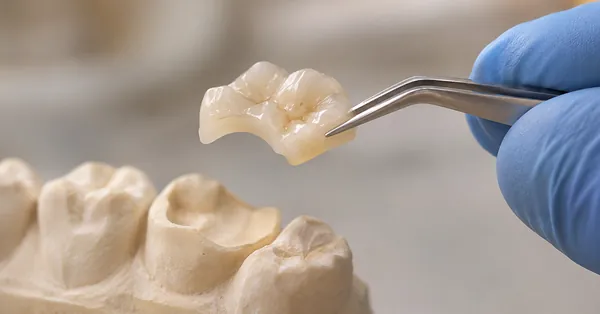
If you have a cavity, a worn-down chewing surface, or an older restoration that keeps breaking, it is normal to wonder: "Do I just need a filling again, or is there a better option?" This is where onlays in Cathedral City often come up, especially for adults who have moderately damaged teeth but want to avoid going straight to a full crown.
At Implants Guru in Rancho Mirage, Dr. Keerthi Senthil (DDS, MS) and our team see a common pattern: patients are told they "need something stronger," but they are not always given a clear explanation of the decision threshold between a filling, a porcelain inlay/onlay, and a crown.
TL;DR - When a Filling Is Not Enough
For moderate tooth damage, a custom porcelain inlay or onlay can be a middle-ground option between a standard filling and a full dental crown. The best choice depends on how much tooth structure is missing, whether a cusp is weakened, and how your bite loads that tooth.
- Choose a filling for small-to-medium decay where the tooth walls are still strong.
- Choose an inlay when damage is mostly within the grooves and between cusps.
- Choose an onlay when one or more cusps are cracked, undermined, or at risk.
- Choose a crown when remaining tooth structure is too thin or fractures are extensive.
- If you are unsure, an exam plus X-rays helps confirm what will protect the tooth long-term.
In our previous blog, "Adult Dental Fillings: Signs, Options, Next Steps," we discussed common warning signs and filling material choices. In this article, we focus on the next decision: when an inlay or onlay is a smarter upgrade than another filling.
The Quick Definitions (So the Rest Makes Sense)
A filling is placed directly into the tooth and shaped in the mouth. Inlays and onlays are custom restorations that fit the tooth precisely, then are bonded in place.
- Filling: best for smaller repairs where the tooth still has strong walls.
- Inlay: fits within the tooth's chewing surface, between cusps (think "inside" the tooth).
- Onlay: covers one or more cusps (think "on top" of the tooth) to reinforce weak areas.
- Crown: covers the entire tooth above the gumline (most coverage, most reduction).
Onlays in Cathedral City: The Decision Threshold Patients Actually Need
Many competitor pages define inlays and onlays but stop short of the real question: When is a filling no longer the right tool? Below is a practical decision-tree style guide you can use before your visit, whether you are in Cathedral City, Rancho Mirage, or elsewhere in the Coachella Valley.
Step 1: How Much Tooth Structure Is Missing?
If the cavity or old restoration is small-to-moderate and the surrounding tooth is strong, a new filling may be appropriate. If a large portion of the chewing surface is missing, a filling can act like a patch on a weak foundation.
Step 2: Are the Cusps (Pointed Chewing Edges) Weak or Cracked?
This is one of the most important tipping points. When a cusp is undermined by decay, weakened by a large old filling, or chipped/cracked, an onlay may protect that cusp from breaking further by "capping" it.
Step 3: Does the Tooth Have a Crack or Bite Sensitivity?
A tooth that hurts mainly when you bite down (especially on one spot) can be a sign of a crack or a stressed cusp. It does not automatically mean you need a crown, but it is a strong reason to evaluate whether an onlay offers better protection than another filling.
Step 4: Is Your Bite High-Force on That Tooth?
Back teeth and teeth that take heavy bite forces are more likely to challenge a large filling over time. If you clench or grind, the margin for error shrinks, and the "stronger option" discussion becomes more relevant.
Inlay vs Onlay vs Crown: A Practical Comparison
The goal is not "bigger is better." The goal is to choose the most conservative restoration that still reduces the risk of future fracture.
When a Filling Is Usually Enough
- Small-to-medium decay or a minor replacement of an old filling
- No cusp cracks or undermined tooth walls
- Bite forces on that tooth are typical
If you are looking into dental fillings and want to understand material options, that page outlines the basics and what to expect.
When a Porcelain Inlay Often Makes Sense
- Damage is mostly within the chewing grooves
- Cusps remain strong enough to keep
- You want a custom fit and durable contact points between teeth
When a Porcelain Onlay Often Makes Sense
- One or more cusps are weakened, chipped, or cracked
- The filling would be wide and deep, with less tooth supporting it
- You want to preserve more natural tooth than a full crown would require
When a Crown May Be the Better Choice
- Extensive fractures or very thin remaining tooth walls
- Damage extends broadly around the tooth
- The tooth needs full coverage to reduce fracture risk
If you are comparing restorative options, our dental crowns page explains when full coverage is commonly recommended.
Material Choices: Why Porcelain Is Common for Inlays and Onlays
Many patients specifically ask about porcelain inlays in Cathedral City or porcelain onlays because they want a tooth-colored restoration that blends into their smile. Porcelain (ceramic) options are popular because they can be made to match the shade and reflect light similarly to natural enamel.
The "best" material depends on your bite, how much tooth structure remains, and where the tooth sits in your smile. During your exam, we evaluate those factors and recommend a material that fits your functional needs first, then aesthetics.
What the Appointment Typically Involves
While each case is different, inlays and onlays generally include:
- Evaluation and imaging: checking for decay, cracks, and bite issues.
- Tooth preparation: removing damaged areas and shaping the tooth for a precise fit.
- Custom fabrication: a restoration is made to match your tooth anatomy and bite.
- Bonding and bite check: the restoration is bonded in place and adjusted so your bite feels even.
After Your Inlay or Onlay: What to Expect
Some mild sensitivity to temperature or pressure can be normal at first, especially if the tooth was already irritated. You should be able to chew comfortably once your bite is properly adjusted.
- Avoid very hard chewing on that side until numbness is gone.
- Pay attention to "high bite" symptoms (the tooth hits first). Call us if that happens.
- Keep up with brushing and flossing to protect the margins.
One Clinical Observation From Our Team
In our experience, patients who have had a large filling replaced multiple times often feel relief when we switch the plan from "another filling" to a restoration that protects the cusps. It is less about changing materials and more about changing the design so the tooth is supported under chewing forces.
FAQs
Related Reading
- Dental inlays and onlays: what is the difference?
- Adult dental fillings: warning signs and material options
- Dental crowns
- Emergency dentistry
Conclusion: The Right Restoration Is the One That Protects the Tooth
If your tooth is moderately damaged, the best solution is not always "the biggest" or "the newest." It is the option that gives your tooth enough support to handle chewing forces without removing more natural structure than necessary. For many adults weighing onlays in Cathedral City, the deciding factor is cusp strength, not just cavity size.
Schedule a Restoration Evaluation
If you are comparing dental fillings, porcelain inlays, or onlays and want a clear recommendation based on your tooth, bite, and goals, call Implants Guru at 760-340-5107 to schedule a consultation.










based on 17 reviews
based on 75 reviews