
Bone Graft vs Sinus Lift Before Implants: What Patients Should Know
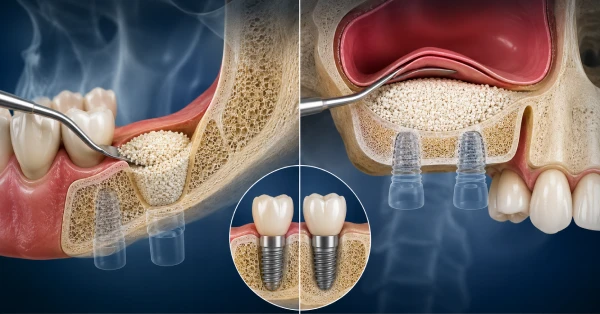
If you are researching dental implants and keep seeing the words "bone graft" or "sinus lift," you are not alone. Many people looking for a bone graft in Yucca Valley are really trying to answer one practical question: Do I need extra bone before I can get an implant?
At Implants Guru, Dr. Keerthi Senthil and our team find that the confusion usually comes from the same place: patients are told they "need a graft" without a clear explanation of which graft, why, and what the decision is based on. This article breaks down the decision in plain language, including how it can apply for patients coming from Yucca Valley, Palm Springs, and Cathedral City.
TL;DR - Bone Graft or Sinus Lift Is About Implant Stability
A bone graft and a sinus lift both aim to create enough strong, healthy bone for dental implant support. Which one you need depends mostly on where the implant is going and how much bone is available in that exact area.
- Bone graft: rebuilds bone width and/or height in many parts of the mouth.
- Sinus lift (sinus graft): adds bone under the sinus in the upper back jaw.
- The decision is imaging-driven: exam plus X-rays and often 3D imaging for precise measurements.
- Timing varies: sometimes grafting is done before implants, sometimes with implants.
- Your best next step: ask what the implant site measurements show and what your options are.
Why Some People Need Extra Bone Before Dental Implants
Dental implants need enough bone to hold them firmly and keep them stable long-term. If the bone is too thin, too short, or not dense enough, an implant may not be placed safely in the ideal position without first rebuilding the foundation.
Bone changes can happen for many reasons, including after tooth loss. Even when the gums look healed, the jawbone can shrink over time because it no longer gets stimulation from the tooth root.
Bone Graft in Yucca Valley: What It Is and When It Is Recommended
A dental bone graft is a procedure that helps rebuild or preserve jawbone so there is enough structure to support an implant. The exact approach depends on the site and the goal, such as improving bone width (thickness), height, or both.
Common Situations Where a Bone Graft May Come Up
- After extraction: preserving bone right away can help reduce future shrinkage.
- Thin ridge: the bone may not be wide enough to fully surround an implant.
- Bone loss from past infection: previous gum or tooth infection can reduce bone support.
- Planning for ideal implant position: sometimes bone must be added to place the implant where it can be cleaned and loaded properly.
If you are still early in the process, start with our overview of dental implants to understand how implants replace a missing tooth and what planning typically involves.
Sinus Lift (Sinus Graft): Why It Is Different From a Regular Bone Graft
A sinus graft, often called a sinus lift, is a specific type of bone graft used for implants in the upper back jaw. In that area, the sinus sits above the tooth roots, and after tooth loss, the available bone height can be limited.
That is why you may see patients searching for a sinus graft in Cathedral City even when their main goal is simply "implants that feel secure." The sinus lift is a location-specific way to create enough vertical bone support for the implant.
When a Sinus Lift Is Most Common
- Upper molars/premolars: especially when the sinus is close to the implant site.
- Reduced bone height: not enough bone between the mouth and the sinus floor.
- Longer time since tooth loss: bone can shrink and the sinus space can expand.
You can also learn about related procedures on our oral surgery page, which covers surgical services that may be part of an implant plan.
How Your Dentist Decides: The Three Measurements That Matter
Whether you are considering a bone graft in Palm Springs or you live closer to Yucca Valley, the decision process should be consistent and evidence-based. The question is not "Do you want a graft?" It is: Does the implant site have enough bone to be stable and placed safely?
1) Bone Height
Height matters most in areas where anatomic structures limit how deep an implant can safely go. In the upper back jaw, this often relates to the sinus.
2) Bone Width (Ridge Thickness)
An implant should be surrounded by healthy bone. If the ridge is too narrow, the implant may be at higher risk for complications or long-term bone loss, and grafting may be recommended to build width.
3) Bone Quality (Density)
Bone density varies by location in the mouth and from person to person. In our day-to-day experience, patients are often surprised to learn that two areas in the same mouth can behave very differently during planning, which is why site-specific imaging matters.
Can Grafting Be Done at the Same Time as Implant Placement?
Sometimes, yes. In other situations, it is safer and more predictable to graft first, allow healing, then place the implant. The best timing depends on how much bone is missing and whether the implant would be stable at placement.
If you want a structured starting point, our dental implant consultation page explains what a consult can include and how treatment planning decisions are made.
Questions to Ask at Your Consult (Bring This List)
Competitors often frame grafting as a simple prerequisite. A better patient-centered approach is to ask for clarity on the decision points. Here are questions that can help you understand whether a bone graft or sinus lift is recommended, and why:
- What are my bone measurements at the implant site (height and width)?
- Is the concern bone height, bone width, or both?
- Is this a sinus-related limitation (upper back jaw)?
- Can grafting be done with implant placement, or should it be staged?
- What are my alternatives if I do not want grafting?
Options If You Are Not Ready for Grafting
Some patients want to avoid surgery if possible, or they need time to consider the commitment. Depending on your situation, alternatives may include replacing a tooth with a bridge. If you are weighing those choices, our blog, "Implants or Bridge? Cathedral City and La Quinta Guide," covers how to compare these options and what tradeoffs to consider.
Bridges are also explained on our dental bridges page if you want a service-level overview.
FAQs
Related Reading
- Dental implants
- Dental implant consultation
- Oral surgery
- Dental bridges
- Implants or bridge comparison guide
Conclusion: The Right Prep Makes Implants More Predictable
The goal of grafting is not to add steps for the sake of it. It is to create a foundation that supports a stable implant and a result that is easier to maintain. Whether you need a traditional bone graft, a sinus lift, or neither, you deserve a clear explanation based on your measurements and your goals.
Schedule an Implant Readiness Evaluation
If you are looking for a bone graft in Yucca Valley, or you have been told you might need a sinus graft or bone grafting before implants, we can help you understand your options. Call Implants Guru at 760-340-5107.
For office details and ways to reach us, visit our contact page.







based on 17 reviews
based on 75 reviews