
Bone Graft vs. Ridge Augmentation Before Implants: What Actually Changes the Plan?

If you have been told you need a bone graft before dental implants, the next question is often, "What kind?" Patients in Cathedral City, Rancho Mirage, and across the Coachella Valley commonly hear related terms like ridge augmentation, socket grafting, or guided bone regeneration. They are all ways of rebuilding bone, but they do not mean the same thing, and the difference can change your timeline and your options.
At Implants Guru, Dr. Keerthi Senthil (DDS, MS) evaluates bone levels and implant goals with a decision-first approach: the plan should match the amount and location of bone loss, not just the label used in a quick conversation.
In our previous blog, "Do You Need a Bone Graft Before Implants?" we discussed common decision points for grafting. In this article, we focus on the more specific comparison patients ask next: bone grafting vs ridge augmentation, and what actually changes the implant plan.
TL;DR - Bone Graft vs Ridge Augmentation Is About Implant Position
Both procedures rebuild bone, but they are not interchangeable. A routine graft often supports healing or fills a small defect. Ridge augmentation is used when the jaw ridge is too thin or too low to place an implant where it needs to be for long-term function and esthetics.
- A "bone graft" is a broad term: it may be small and localized or more involved.
- Ridge augmentation is more specific: it changes ridge width and/or height to support ideal implant placement.
- 3D CBCT planning matters: it shows whether the limitation is width, height, or both.
- The plan changes based on stability: can an implant be stabilized now, or does the site need development first?
- Ask outcome-focused questions: what problem are we solving, and what does success look like?
Quick Definitions: What Dentists Mean By Each Term
What A Bone Graft Usually Means
"Bone graft" is an umbrella term for adding graft material to help rebuild jawbone. In everyday use, it can refer to several different situations, including preserving bone after an extraction or rebuilding an area that has shrunk over time.
What Ridge Augmentation Specifically Means
Ridge augmentation is bone grafting with a more specific goal: rebuilding the shape of the jaw ridge so an implant can be placed in the correct position. It is typically discussed when the ridge is too narrow (width problem), too short (height problem), or both.
What Actually Changes the Plan Before Dental Implants
Most patients are not looking for a vocabulary lesson. They want to know what changes if they need a bone graft in Cathedral City, and why a dentist might recommend ridge augmentation instead of a simpler graft.
Change #1: Whether The Implant Can Be Placed In The Ideal Position
The main reason ridge augmentation comes up is that implant position matters. If bone is too thin, the implant may not fit safely in the correct spot, or the final tooth may have to be angled in a way that compromises hygiene or appearance.
Change #2: How Much Bone Needs to Be Built, and Where
Small defects (for example, a minor gap next to an implant) can sometimes be handled with more localized grafting. A ridge that has narrowed significantly often needs a different plan because the missing bone is structural, not just a small void.
Change #3: Whether This Is A One-Stage or Two-Stage Approach
A key planning question is stability. If there is enough native bone to hold an implant securely, grafting may be performed at the same appointment. If there is not enough bone to stabilize the implant, site development (including ridge augmentation) may be recommended first, followed by implant placement after healing.
Bone Graft in Cathedral City: The Common Decision Triggers We Look For
When someone comes in asking about a bone graft in Cathedral City, the decision is rarely based on a single factor. It is usually a combination of anatomy, goals for the final tooth, and the condition of surrounding gum and bone.
Typical Reasons A Basic Graft May Be Enough
- Recent extraction site preservation: helping preserve ridge contours for a future implant.
- Minor contour defects: adding support where a small area is missing.
- Small gaps around a planned implant: when the implant can still be stabilized properly.
Typical Reasons Ridge Augmentation May Be Recommended
- The ridge is too narrow: the implant cannot be placed without risking poor bone support.
- The ridge height is reduced: there is not enough vertical bone for safe placement in the planned area.
- Esthetic zone demands: rebuilding bone helps support gum contours and a natural-looking emergence profile.
- Long-standing tooth loss: bone changes over time can make the site more complex than expected.
How 3D Cone Beam Planning Helps Decide (And Helps Avoid Surprises)
Treatment planning is most predictable when you can measure the ridge in 3D. Our site explains this approach on the technology page, including how modern imaging supports safer, more accurate implant planning.
In practical terms, 3D imaging can help clarify whether you have:
- A width problem (the ridge is thin from cheek to tongue)
- A height problem (the ridge is short from gumline to deeper anatomy)
- A position problem (bone exists, but not where the implant ideally needs to be)
What Patients in Rancho Mirage and the Coachella Valley Should Ask Before Saying Yes
People searching for a bone graft in Rancho Mirage or a bone graft in Coachella Valley often get multiple opinions. These questions help you compare plans based on outcomes, not just procedure names.
Ask These Five Questions
- What is the goal of the graft? (More width, more height, better contour, or preserving an extraction site?)
- Can the implant be placed at the same time? If not, what needs to heal first and why?
- How will this affect the final tooth position? Where will the crown sit relative to the neighboring teeth?
- What are the alternatives? (For example, different implant options or a staged plan.)
- What follow-up is expected? When do you re-check healing before moving forward?
Where This Fits Into The Bigger Implant Plan
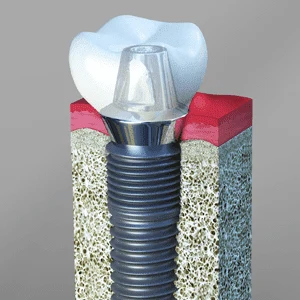
Grafting is not the end goal. It is part of building a foundation for an implant that functions well and is maintainable long term. For an overview of implant treatment planning, visit our dental implants page.
A Clinical Observation From Our Team
In our experience, the biggest misunderstandings happen when patients are told they "need a graft" without hearing the why. When the conversation shifts to implant position and long-term maintenance, the right choice between a smaller graft and ridge augmentation becomes much clearer and patients feel more confident about the plan.
FAQs
Related Reading
- Bone grafting service information
- Bone graft before implants: signs and options
- Bone graft vs sinus lift before implants
- Dental implant consultation
- Sinus graft surgery
Conclusion: Get Clear on the Why, Not Just the Name
"Bone graft" and "ridge augmentation" are both about rebuilding support for implants, but they can describe different levels of site development. If your goal is a stable, cleanable, natural-looking implant restoration, the right question is not only whether you need grafting, but what the graft is intended to change.
Schedule an Implant Planning Visit
If you are comparing options for a bone graft in Cathedral City or want a clear second opinion on ridge augmentation versus a simpler approach, call Implants Guru at 760-340-5107 to schedule a consultation.













based on 17 reviews
based on 75 reviews