
Complete Dentures vs Implant-Supported Dentures: A Practical Choice Guide
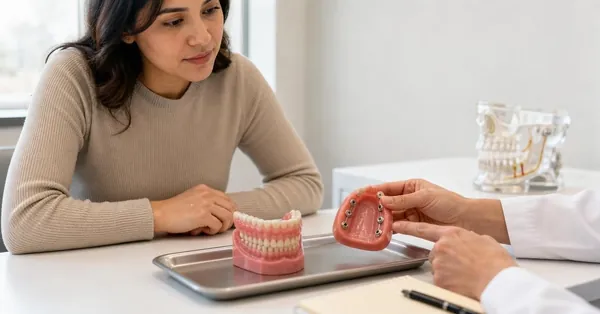
If you are weighing complete dentures in Cathedral City, you may also be wondering whether implant-supported dentures are worth considering. The truth is that both options can help you smile and chew again, but they feel very different in everyday life. The best choice usually comes down to stability, comfort, long-term bone changes, and how much daily maintenance you are comfortable with.
At Implants Guru in Rancho Mirage, Dr. Keerthi Senthil (DDS, MS) helps patients from Cathedral City, Rancho Mirage, and across the Coachella Valley compare denture options with a focus on function, confidence, and long-term oral health.
TL;DR - Choose Based on Stability and Long-Term Fit
Complete dentures can be a solid solution when you want a non-surgical way to replace all teeth. Implant-supported dentures add stability by anchoring to implants, which often helps with lower-denture movement and chewing confidence.
- Complete dentures rest on the gums and may need relines as the jaw changes over time.
- Implant-supported dentures can reduce slipping and sore spots by improving retention and bite stability.
- Lower dentures are more likely to feel loose without implants because the tongue and muscles can dislodge them.
- Your evaluation should check gum health, bone levels, bite, and whether implants are feasible.
- Partial dentures are for when you still have some healthy teeth and want to replace only the missing ones.
What Patients Really Mean When They Say "I Need Dentures"
People searching for dentures are usually trying to solve one (or more) of these problems: they cannot chew comfortably, teeth are breaking down, they feel embarrassed about gaps, or they are tired of repeated repairs. From there, the decision becomes less about a label and more about what you want daily life to feel like.
Complete Dentures
Complete dentures replace all teeth in an upper arch, lower arch, or both. They sit on the gums and are custom-made to restore appearance and basic function.
Partial Dentures
Partial dentures replace multiple missing teeth when you still have natural teeth remaining. If you have been searching for partial dentures in Cathedral City, a key step is confirming which teeth are strong enough to support a partial and whether other options (like bridges or implants) make more sense long term.
Complete Dentures in Cathedral City: The Everyday Pros and Cons
Conventional complete dentures can be a practical choice for many patients because they are non-surgical and can often be made even when teeth have been missing for a long time. At the same time, they come with realities that are not always emphasized in "types of dentures" pages.
Where Complete Dentures Shine
- Non-surgical tooth replacement: no implant placement is required.
- Restores a full smile: replaces all teeth in the arch with one appliance.
- Repairable and adjustable: relines and adjustments can improve fit over time.
Common Challenges Patients Notice
- Lower denture movement: the lower arch often feels less stable than the upper.
- Sore spots: pressure points can develop, especially early on.
- Chewing limits: certain foods (steak, crunchy items, sticky foods) may be harder.
- Fit changes over time: the jawbone can gradually shrink after tooth loss, affecting retention.
In our experience, the patients who are happiest with traditional dentures are the ones who start with realistic expectations and a plan for follow-up visits. Most dentures need some fine-tuning after delivery to reduce rubbing and improve comfort.
Implant-Supported Dentures: When Stability Matters More Than Convenience
Implant-supported dentures are designed to improve retention by connecting the denture to dental implants. This is especially helpful for patients who feel their lower denture shifts, lifts, or clicks when eating or speaking.
If you are already exploring implant options, our implant-supported dentures page explains the service in more detail.
What "Implant-Supported" Can Mean (Removable vs Fixed)
- Removable implant-retained dentures: often "snap" onto attachments for a more secure feel, then come out for cleaning.
- Fixed implant dentures: designed to stay in place and be cleaned similarly to natural teeth (with specific tools and routines).
Quality-of-Life Benefits Patients Often Care About
- More confidence eating in public: less worry about shifting.
- Improved bite stability: can reduce the feeling that you must "baby" your denture.
- Potentially fewer sore spots: because retention is shared by implants rather than relying only on gum suction and adhesives.
How To Choose: A Simple Decision Checklist
If you live in Cathedral City or nearby communities like Rancho Mirage, you have options. Here is a practical way to think through the choice without getting lost in terminology.
You May Lean Toward Complete Dentures If...
- You want a non-surgical solution.
- You are comfortable with the idea of using adhesives at times.
- You are okay with periodic relines as your mouth changes.
- Your main goal is restoring appearance and basic chewing rather than maximum stability.
You May Want To Explore Implant-Supported Dentures If...
- Your lower denture feels loose, even after adjustments.
- You are getting frequent sore spots or rubbing.
- You want a more secure bite for a wider range of foods.
- You are looking for a solution designed to feel closer to natural teeth day to day.
What an Evaluation Typically Checks (And Why It Matters)
A good denture decision is based on how your mouth is today, not only what you "want" the denture to do. An evaluation typically includes:
- Gum and tissue health: ensuring the foundation is healthy and comfortable.
- Bite and jaw comfort: checking how your jaws meet, which affects soreness and function.
- Bone levels: understanding whether implants are feasible and where they can be placed safely.
- Denture history: what has and has not worked for you (adhesives, relines, prior sore spots).
- Your daily goals: eating preferences, social confidence, and cleaning routines.
When implants are part of the discussion, that often includes a broader look at dental implants as a foundation for stabilizing dentures.
Cathedral City and Coachella Valley Considerations: Heat, Dry Mouth, and Fit
Many patients in the Coachella Valley notice that dry mouth can make dentures feel less secure or more irritating. Saliva helps create suction and lubrication, so reduced saliva may increase friction and sore spots.
If you notice dryness, ask about strategies like hydration habits, saliva substitutes, and adjusting the denture fit. The goal is comfort and tissue health, not "toughing it out."
How This Compares to Other Tooth Replacement Options
Some patients deciding between dentures and implants also ask about bridges. If you still have some teeth, a bridge may be an option in specific situations. You can review basics on our dental bridges page.
FAQs
Related Reading
- Dentures
- Implant-supported dentures
- Lower implant-supported snap-on denture
- Dental implants
- Meet Dr. Keerthi Senthil
Conclusion: The Best Denture Choice Is the One You Can Live With Daily
If you are comparing complete dentures and implant-supported dentures, focus on what will matter at breakfast, at dinner, and in conversation. Stability, sore spots, fit changes, and cleaning routines are the details that shape satisfaction over time, not just the label of the appliance.
Schedule a Denture Consultation
If you want help choosing between complete dentures and implant-supported dentures, our team can walk you through the pros and cons for your mouth and your goals. Call Implants Guru at 760-340-5107 to schedule a consultation.
To explore the full range of services we provide, visit our dental services page.







based on 17 reviews
based on 75 reviews